Love, Loss, and a New Path: Sam Houston’s Life Among the Cherokee
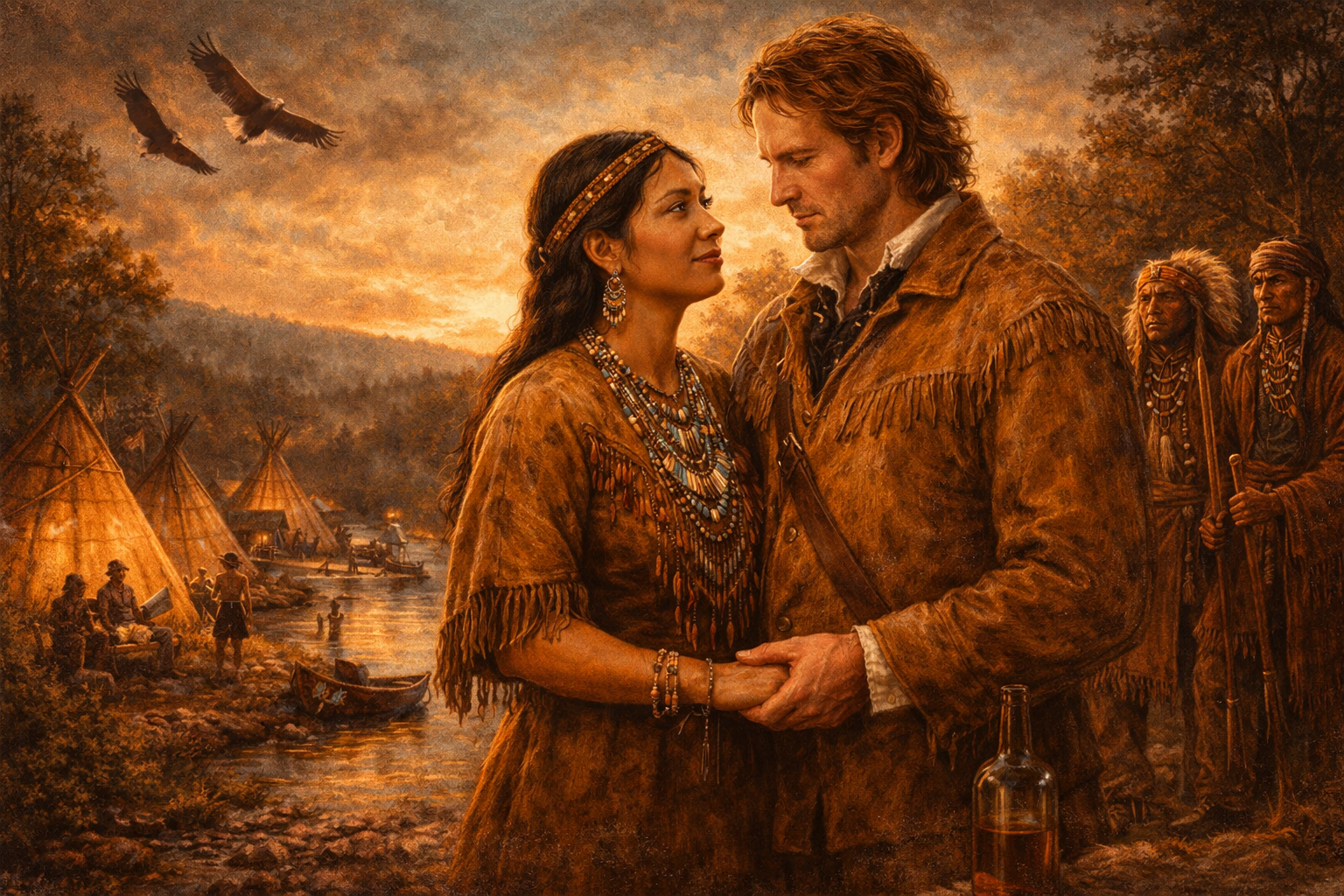
After about a year with the Cherokees, he began a relationship with a native woman Diana Rogers Gentry, the beautiful mixed race daughter of a leading Cherokee family. In the summer of 1830 they married in a Cherokee ceremony which reduced his standing still further in white Christian eyes.
(Tiana- Cherokee name and Diana- English name for the daughter of Scotland’s John Rogers and Jennie Due of the Cherokee Nation. She was widow of David Gentry, who was killed in an Indian raid, and had a son Gabriel born in 1819 and a daughter born in 1822 when she married Sam Houston.)
As Houston’s WigWamNeosho Trading Post prospered, Diana managed most of its affairs and sometimes had to travel into Fort Gibson to retrieve the drunken Houston. Despite Houston’s alcoholism, his diplomatic work for the Cherokee nation earned him tribal citizenship. Sam gradually began to drink less, work as he desired, and was frequently away as a representative,
spokesman, and/or an interpreter for various Indian tribes. In late 1831 he was sent to Washington, D. C. to speak with Andrew Jackson.
After a challenging experience in representing his Indian friends, and being in Tennessee at his mother’s bedside as she died, Sam boarded a steamboat, not knowing for sure where he was going or what he would do. After a few days onboard, he even thought of suicide.
While standing on the upper deck one afternoon, he looked up to see an eagle fly westward. Having lived with the Cherokee in Tennessee, he learned much about watching for omens and signs that the earth, land, or sky might supply. He believed in omens, and after seeing the eagle fly westward, he decided to go west and see what new adventure awaited him.
Another passenger on the same steamboat was French writer Alexis de Tocqueville, who was traveling to gather impressions of America. Tocqueville had heard terrible things about Houston, and avoided him for four days... “This man was once governor of Tennessee; since abandoning his wife, he took refuge with the Indians. He was adopted by one of the chiefs and is said to have married his daughter. Since then he has been living in the middle of the wilderness half European and half savage.”
Once the two men met; they had a long talk. Tocqueville said that by moving the Indians west of the Mississippi, the government would eventually want that land as well, but he could not get Houston to agree. Houston believed the government would honor its treaties.
Houston also surprised Tocqueville with his view of slaves: “They were every bit as intelligent as the Indians and were always being degraded by not having the opportunity to make decisions and look after themselves.”
In January 1832, Houston departs from the steamboat in New Orleans, Louisiana on his way to Washington, D. C.