Broken, Banished, Renamed: The Darkest Chapter of Sam Houston’s Life
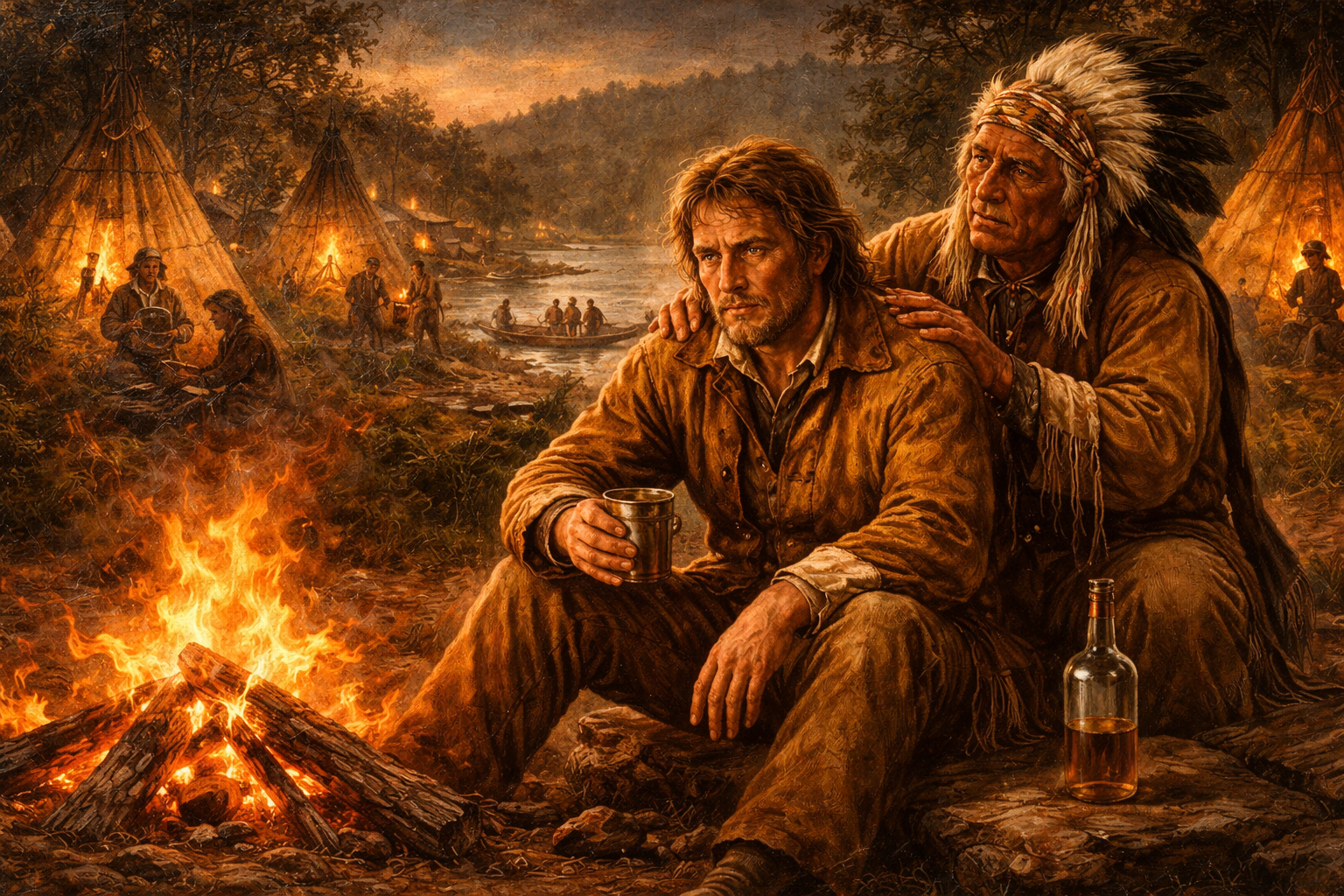
As a young army Lieutenant, Houston managed the removal of the Cherokee band with whom he lived as a youth from eastern Tennessee to parts of Arkansas.
Houston had a great heart break after separating from Eliza Allen and experienced a period of deep depression and hopelessness. At the beginning of 1829 he was a popular governor and widely viewed as a future president. By May, a small boat took Sam to reunite with his adoptive father on the Arkansas River across from Illinois.
Meeting him on the bank by torch light, Ooleetehkah was very pleased to greet Sam: “My son, eleven winters have passed since we met. I have heard that a dark cloud has fallen on the white path that you were walking, and you turned your thoughts to my wigwam. I am glad it was done by the great spirit. My home is yours, my people are yours, rest with us.”
During this time with his Cherokee family and friends, Sam was able to relax and think about his future.
The Cherokee had adopted a life style similar to their Anglo American counterparts as they had learned to build frame houses and clear fields to plant crops to sustain themselves in addition to their hunting. They also began publication of a native language newspaper using Sequoyah’s Cherokee alphabet.
Sam started a trading post named WigWamNeosho in Oklahoma importing such a large amount of whiskey that the commander of Fort Gibson suspected he was selling it to the Indians. At his lowest point, Houston even struck his adopted father, which was an unspeakable disgrace, and he failed to finish among the top candidates for tribal council.
As a teenager while first living with the Cherokee in Tennessee, they gave him the Cherokee name Colonneh or The Raven which was an important Cherokee totem. When he lived with the Cherokee in Oklahoma, they took that name away from him and gave him another name Oodseeauduteskey which was not a Cherokee name but an Osage name for “Big Drunk.”
Not only did they insult him; they took his Cherokee identity away.